If you’re a pet owner in San Diego, you know how important it is to give your furry friends the freedom they need. Many homeowners install a pet door in their front or back entrances. But is it possible to install a dog or cat door in your garage door, and is it the right choice for your home?
The answer depends on a few key factors, including the material and construction of your garage door. Some doors are better suited for pet door installation than others. In some cases, upgrading your garage door to a new model that accommodates a pet door may be the best solution.
Read all about garage door pet doors, including what to consider, how installation works and how to make the best choice for your home and your pets.
Table of Contents
What Is a Garage Door Pet Door?
A garage pet door is a small, closable flap installed in a section of your garage door to let pets come and go as they please. There are a few types to consider:
- Manual flap doors: The traditional flap is a simple, swinging door that allows your pets to pass through. These doors are reliable and cost-effective, but they can sometimes allow small animals or intruders to enter. To address this, use a locking cover to secure the pet door when it’s not in use.
- Hard plastic pet doors: These doors feature a sturdy plastic flap and often include a locking platform that slides across the opening.
- Electronic pet doors: These doors only open when they detect a special collar or your pet’s microchip. While they tend to be more expensive, they offer peace of mind by keeping out wildlife and unwanted visitors.
Pros of a Garage Door Pet Door
Installing a dog or cat door for the garage — rather than directly into the house — strikes a good balance between home security and your pet’s comfort.
Peace of Mind
Many people hesitate to install a pet flap in their entrance doors because they can potentially provide a way for unwanted guests to access the house. Having a pet door for your garage prevents burglars and pests from accessing the inside of your home, while still providing an easy entry and exit method for your pet. This is especially important in busier residential areas where homeowners might be more security conscious.
Freedom and Convenience
A dog door for the garage provides your pets with more freedom and stimulation. Your pets can let themselves out whenever they need to, which means fewer accidents in the house. With access to a fenced and gated yard, energetic dogs can burn off excess energy when they need to without disturbing your day. If you have outdoor cats, they can explore while still having a safe space to return to.
This extra activity can help reduce boredom and prevent unwanted behaviors, such as chewing or scratching.
Cons of a Garage Door Pet Door
While a garage door pet door offers many benefits, it’s essential to consider the potential drawbacks before making a decision.
Security Risks
While not providing access to your home, a garage door pet door can still become an entry point for raccoons, squirrels or other wild animals. Since these pests can carry diseases and cause costly damage, it’s wise to choose a pet door with a secure locking cover to minimize these risks.
Structural Integrity
Cutting into a garage door panel to install a pet door can affect the door’s structural integrity and may void the manufacturer’s warranty. If not done correctly, it can impact the door’s balance, insulation and security. Professional installation ensures the modification doesn’t compromise your garage door’s performance.
Should You Install a Pet Door in Your Garage?
Review the following considerations to determine if a pet door is right for you:
Pet Size
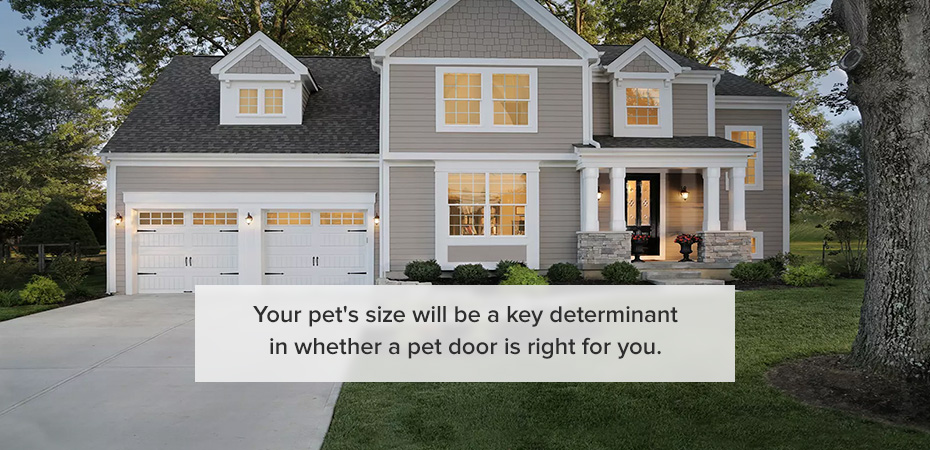
Your pet’s size will be a key determinant in whether a pet door is right for you. The door opening should be large enough for your pet to pass through comfortably, but not so large that it affects your garage’s security.
If your garage door is a single slab of metal or wood, you can install a pet door of any size without issue. However, if you have a sectional garage door, your options are more limited. The pet door can’t be larger than an individual panel, and since most panels are on the smaller side, it can be difficult to find a pet door that fits larger dogs. If your panels are too small or your door isn’t thick enough, installing a pet door may not be possible.
Weather and Fire Safety
A pet door is an additional opening in your home, which comes with its own set of considerations. Poorly sealed pet doors may allow drafts, moisture, or rain to enter your garage. To avoid this, look for pet doors with multiple weather-sealing points and proper insulation.
You may also want to review your home insurance policy, homeowners association and local building codes to ensure that installing a pet door won’t cause issues. Luckily, there are fire-rated pet doors equipped with heat sensors that detect fires and automatically lock, creating a smoke seal that prevents your pet from entering a hazardous area.
Pet Safety and Training
For your pet’s safety, your yard should have a fence and gate before you can install a dog door in the garage. Teach pets to wait until the door is fully open before approaching, and be careful not to accidentally lock them outside. You should also regularly test your garage door’s auto-reverse system by placing a small object under the door. If it doesn’t reverse immediately, contact a professional technician to fix it.
Some pets may be anxious around the noise and movement of garage doors. For nervous animals, gradually desensitize them by playing garage door recordings at low volume and rewarding calm behavior. For both cats and dogs, establish a routine that keeps them safely away from the garage door when it’s in use.
Garage Size and Type
The installation process will depend on both your garage door’s material and the type of pet door you select. Steel garage doors are generally the easiest to modify, while wood garage doors may require more specialized tools and expertise. Professional installation maintains the integrity of your door and the safety of your pets. A quality installation will also include proper flashing and caulking around the door frame to maintain your garage’s energy efficiency and weatherproofing.
When to Repair vs. Upgrade Your Garage Door
If your garage door is older or has been giving you trouble, you might be considering whether to invest in significant repairs or go for a full replacement. Before you move forward with a pet door installation, have your garage door professionally inspected.
A trained technician will be able to advise you on common issues, like noise, slow operation or jerky movement, as well as assess the structural soundness of a warped, dented or unbalanced garage door. These factors will play a key factor in whether a garage door pet door is right for you.

Your Local Garage Door Experts in San Diego
At Easy Open Garage Door Company, we’re proud to be trusted local experts for all things garage doors. Our technicians can handle garage door repairs and garage door tuneups, so your door is ready for modifications.
Whether you’re considering a new pet door, need a repair, or want to upgrade your entire garage door system, we can make it happen. Schedule a garage door inspection or request a service estimate.