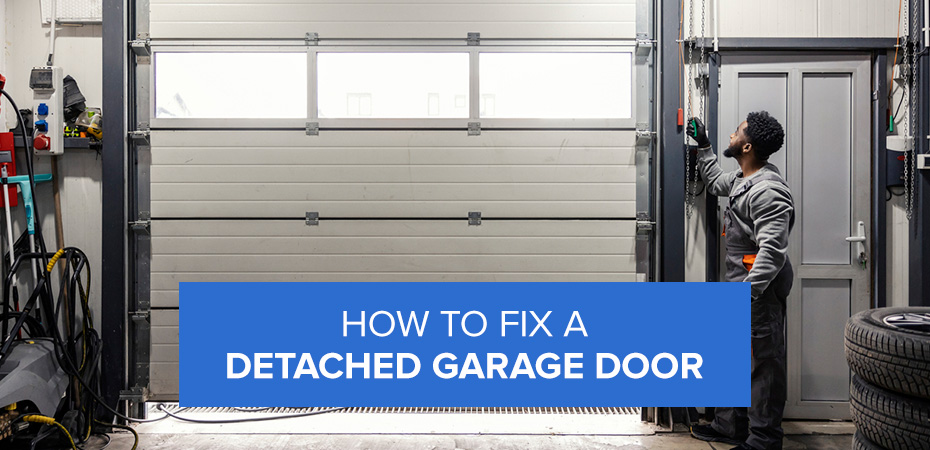
A detached garage door can do more than disrupt your routine. It can affect security and introduce safety concerns for anyone nearby. When a door is off track or partially disconnected, it may bind or stop responding the way you expect. Addressing the issue promptly and carefully can give you peace of mind.
Explore why a garage door can become detached, how to fix it and the importance of regular maintenance.
Table of Contents
How a Garage Door Can Become Detached
Understanding how a garage door becomes detached helps you determine whether you are dealing with a simple track issue or a deeper mechanical problem. Detachment typically happens because of:
- Impact damage: Contact from a vehicle or commercial equipment can bend the track or shift mounting brackets. Once the track geometry changes, the roller no longer sits squarely in the channel. That misalignment increases friction as the door moves, which makes it easier for a roller to slip out of the track.
- Worn rollers or bearings: Rollers and bearings support the full weight of the door while allowing smooth movement. As they wear, bearings can dry out or seize, causing the roller to slide instead of rotate. Added resistance increases strain on the opener and track, compounding stress throughout the system.
- Loose hardware: Every open and close cycle creates vibration. Without periodic tightening, bolts and track brackets can loosen, causing the track to drift out of its original position.
- Obstruction and debris: Garage door tracks are exposed to dirt and debris. When a roller encounters an obstruction, it may hesitate or lift while the door continues moving. Repeated interruptions increase wear on the components, and if debris remains, the roller can move out of the channel.
- Cable issues: When a cable frays or slips off the drum, the door can tilt, placing uneven force on the tracks. That imbalance can lead to detachment. Cables operate under high tension, so if you notice uneven movement or slack cables, call a professional for repairs.
How to Reattach Your Garage Door
Reattaching a garage door is only appropriate when the door has come off the track, and the springs and cables appear intact. Before making any adjustments, it is important to avoid pulling the emergency release cord if the door is in the open position, as releasing an unsupported door can cause it to drop unexpectedly.
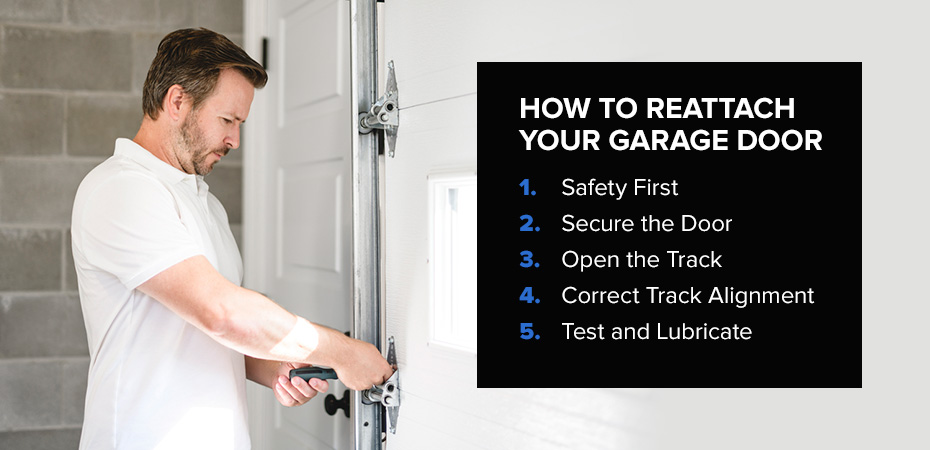
Follow the five steps below to fix a garage door that is off track.
1. Safety First
Before any hands-on work begins, safety and system awareness come first. Garage doors are heavy, and their lifting components store energy even when the door is not moving. To ensure safety:
- Disconnect power to the garage door opener so the system cannot activate unexpectedly.
- Visually check the springs to confirm they are intact and seated correctly.
If spring tension appears uneven or compromised, stop the repairs and call a professional, as spring adjustments fall outside the realm of safe DIY work.
2. Secure the Door
Once you’ve disconnected power and the system looks stable, prevent uncontrolled movement. Use locking pillars or C-clamps, and secure them firmly to both vertical tracks just below the lowest roller. These clamps hold the door in place while you work.
You can reduce the risk of downward movement during the repair process and create a stable working condition by anchoring the door.
3. Open the Track
With the door secured, focus on the point where the roller left the track. In some cases, you may only need a small opening to guide the roller back into position.
Using pliers, gently bend the outer edge of the track outward near the detached roller. The adjustment should be minimal — just enough to create clearance. Once you’ve made the opening, guide the roller wheel back into the track channel by aligning it carefully and easing it into place.
After the roller is seated correctly, bend the track edge back to its original shape so the roller remains captured during operations.
4. Correct Track Alignment
Reinserting the roller addresses the immediate issue, but proper alignment determines whether the fix will be effective.
Loosen the mounting bolts that secure the track to the wall just enough to allow movement. Using controlled taps, adjust the track until it’s perfectly vertical. Place a level along the length of the track to confirm consistent alignment from top to bottom.
Once the track is plumb, retighten the mounting bolts securely to ensure the rollers travel smoothly and distribute load evenly throughout the system.
5. Test and Lubricate
Before reconnecting the opener, manually open and close the door several times. As you move the door up and down, feel for resistance or uneven motion that may indicate lingering alignment issues.
If the door moves smoothly, apply a silicone-based lubricant to the roller, hinges and track contact points to reduce friction without attracting dust or debris. After manual testing confirms smooth travel, restore power to the opener.
Why Garage Door Maintenance Is Important
While knowing how to fix a detached garage door is essential, regular maintenance helps keep all components operating within their intended tolerances. Upkeep helps:
- Prevent derailment: Routine maintenance keeps tracks aligned and hardware properly secured. When these elements stay in balance, the door moves predictably.
- Extend component lifespan: Garage components naturally wear over time, but friction and misalignment can accelerate that process. Proper lubrication, tightening and adjustment reduce unnecessary strain, allowing components to age at a normal rate.
- Ensure safety: A well-maintained garage door operates smoothly and efficiently. Regular inspections identify early signs of wear and fatigue before they affect door stability, which helps support safe operation for daily use.
- Save costs: Preventive maintenance can cost far less than emergency repairs or system replacements. Addressing small alignment issues or worn parts helps prevent secondary damage to other components that may require a complete overhaul and affect your budget.

Trust Your Local Professionals for Garage Door Services
While you can address some track-related issues on your own, other garage door problems may extend beyond visible signs. When you’re experiencing cable or structural component malfunctions, professional repairs or replacements ensure long-term reliability.
Easy Open Garage Door Company has over 30 years of experience repairing, installing and maintaining garage doors for homeowners and commercial businesses across most of San Diego County.
Our employees each have a minimum of 15 years of experience in the garage door field, which allows us to diagnose issues accurately and recommend solutions suited to your system. Every installation includes a one-year labor warranty, and we handle any claims for our customers.
Contact us today to learn how we can help you get your garage door back on track.